
Buy USDT Safely: Payment Methods, Fees and Network Choice
A $1,000 USDT order can cost a few dollars or several dozen. See what payment method, network and spread fees really add up to before you confirm.
- Published
- Reading time
- 5 min read
- Author
- Dana Whitfield
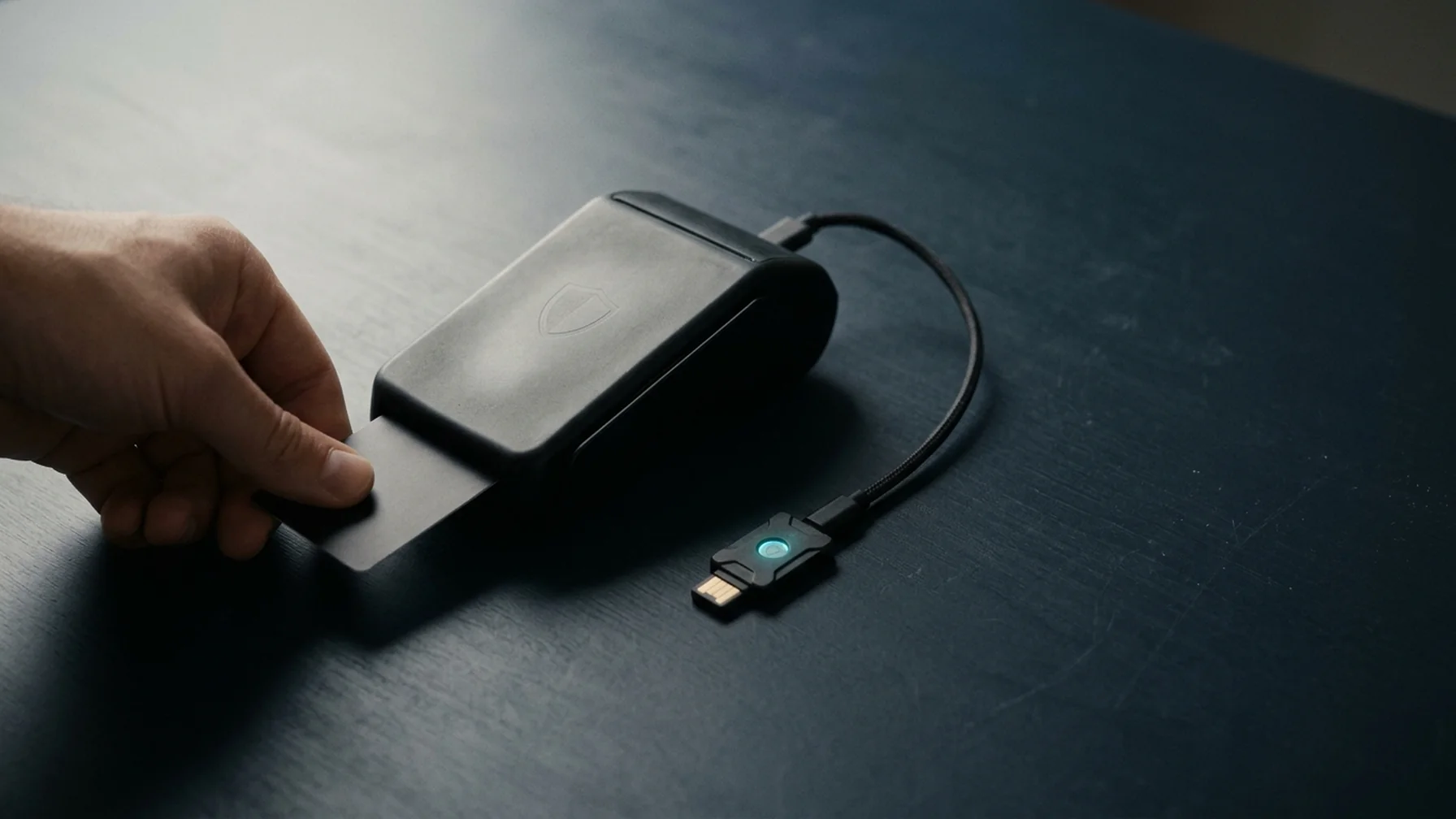
When you buy USDT, the price on the screen is only one line of the bill. A $1,000 order can cost you a few dollars or several dozen, depending on how you pay, which network you pick and where the order sits relative to the provider's spread. This guide shows what drives the cost, where fees hide and how to estimate your real result before you confirm.
The stablecoin price is designed to sit near one dollar. What moves is everything around it: the payment rail, the conversion spread, the network fee, and whether the platform charges a flat rate or a percentage.
What you actually pay when you buy USDT
Strip an order into four parts. First, the base price of USDT against your currency, which includes the provider's spread. Second, the payment fee, if the provider charges one for a card or bank transfer. Third, the network fee to move USDT on-chain. Fourth, any fixed fee for small orders, which hurts most.
A provider that advertises "zero fees" often earns on the spread instead. If USDT trades near $1.00 and you pay $1.02, that is a 2% cost with no line item attached. Compare the all-in cost per $1,000, not the fee labels.
Use this formula, with illustrative numbers, not real quotes:
| Line | Illustrative example | What it means |
|---|---|---|
| Base price per USDT | $1.018 | Includes the spread |
| Payment fee | $6.00 on $1,000 | 0.6% card or bank charge |
| Network fee | $0.40 | Depends on chain and congestion |
| USDT received | ≈ 977.9 USDT | ($1,000 − $6.00 − $0.40) ÷ $1.018 |
The all-in cost here is about 2.2%. Run the same arithmetic on two or three providers and the cheapest option is often not the one with the lowest headline fee.
How to buy USDT: the steps that affect cost
The sequence is short, but each step has a cost or a delay attached.
- Pick a regulated on-ramp. A centralized exchange or a licensed fiat-to-crypto service will ask for identity verification: a government ID, sometimes a selfie and proof of address. This is a legal requirement in most jurisdictions, so verify the rules for your country on the regulator's official site.
- Choose your payment method. Bank transfer, debit or credit card, and local payment systems each sit on a different rail with a different fee and settlement time.
- Check the quote before you confirm. Look for the price per USDT, the fee line and the amount you will receive. If the platform shows only a total, calculate the implied rate yourself.
- Select the network for withdrawal. USDT exists on several chains. Pick the one your destination wallet supports and compare its fee.
- Send a test amount first. A small transfer confirms the address and network before you move the full sum.
Payment methods and what they cost you
Bank transfers are usually the cheapest route, but they can take a business day or more and may be limited to business hours. Cards clear fast and are convenient for small amounts, yet they often carry the highest percentage fee and may be treated as a cash advance by your card issuer.
Local payment systems, such as instant bank rails in some countries, can be cheap and fast, but availability depends on your region and the provider's banking partners. Peer-to-peer marketplaces can offer better rates, but you take on counterparty risk and must check the trader's history and the platform's escrow process.
Network choice: the fee you control
USDT runs on multiple blockchains, and each one has its own fee and speed. Busy networks cost more to use. Cheap networks can be fast and near-free, but not every exchange or wallet supports them.
Check three things before you withdraw. Does the receiving wallet support that network? Does the sending platform support it? And is the fee paid in the network's own token, which you may need to hold? A cheap network that your wallet cannot receive is not cheap, because a wrong-network transfer can mean lost funds.
Stablecoin issuers can freeze tokens in some circumstances, so network choice is not only about cost. Read the issuer's terms if the funds are for a business and traceability matters. Where rules vary by country, check the official source rather than a forum post.
Where to buy USDT at a low price
The lowest price is rarely a single platform; it is the best combination of spread, payment fee and network fee for your amount and country. Three practical checks narrow it down.
- Compare the all-in rate for the exact amount you plan to buy, since fixed fees shrink as orders grow.
- Check whether the provider publishes its spread or only a total price.
- Confirm the withdrawal network fee and whether the platform charges its own withdrawal fee on top.
Larger orders often justify a bank transfer despite the wait. Small orders usually favor speed, because a fixed fee can eat a noticeable share of a $100 purchase. Verify limits, fees and licensing for your country on the provider's official terms and your local regulator's site before you commit.
Ways to pay less and avoid mistakes
Batch your purchases. One $1,000 order usually costs less in fixed fees than ten $100 orders. Fund with a bank transfer when you can wait, and keep cards for emergencies. Check the network fee at the moment of withdrawal, because it moves with congestion.
Keep records of every purchase, including the rate, fees and network, for tax and accounting. Tax treatment of stablecoin transactions varies by country, so confirm the rules with a qualified professional. Never share verification codes, and treat any offer of a guaranteed below-market price as a red flag.
This article is general information, not financial, legal or tax advice.