
Crypto Off-Ramp: How to Turn Crypto Into Cash
Turn crypto into cash without losing money on fees or compliance delays: how off-ramps work, the checks to run before you sell, and tax records to keep.
- Published
- Reading time
- 7 min read
- Author
- Dana Whitfield
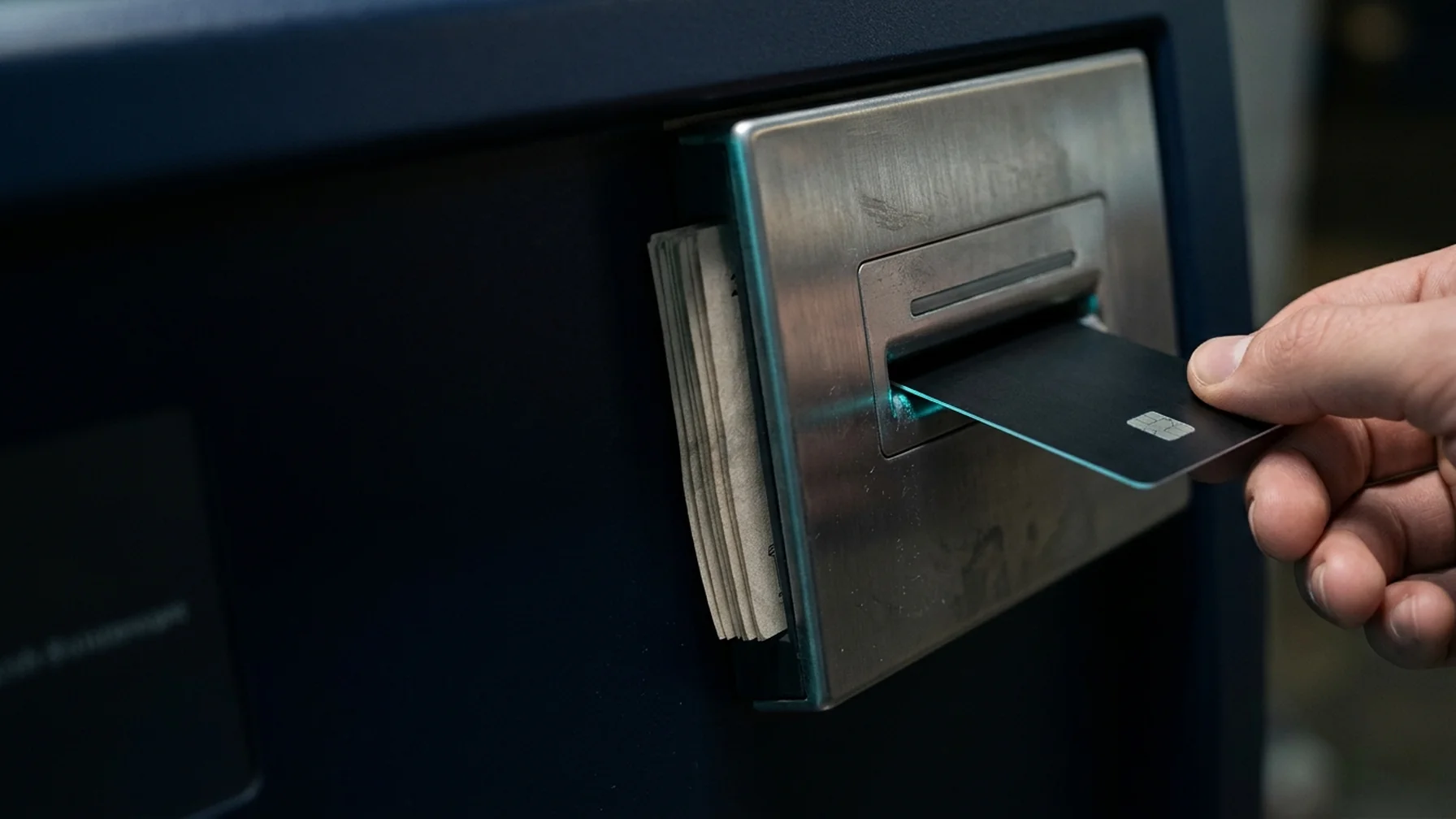
A crypto off-ramp is the route that moves value from a blockchain wallet into a bank account, a debit card, or physical cash. You sell or swap the asset, the provider converts it at a quoted rate, and fiat lands somewhere you can spend it. That is the whole mechanism. What separates a clean exit from an expensive one is the order you do things in and the questions you ask before you sell.
Most people treat the off-ramp as the last step and the easiest one. In practice it is the step where identity checks, network choices, and tax records all collide. Getting it right starts before you press sell.
What a crypto off-ramp actually does
An off-ramp is a conversion plus a transfer. The conversion side turns BTC, ETH, or a stablecoin into fiat at a price the provider sets. The transfer side sends that fiat to a bank account, a payment app, a prepaid card, or an ATM. Some services do both in one flow; others split them, which is why timing and fees can differ from what you expected.
Off-ramps come in a few shapes, and the right one depends on how much you are moving and how fast you need it.
- Centralized exchange withdrawal: sell on an exchange, then withdraw fiat to your bank. Best for larger amounts and mainstream coins, but requires full account verification.
- Peer-to-peer marketplace: sell directly to a buyer who pays you by bank transfer or payment app. Flexible, but you carry counterparty risk.
- Instant swap apps and wallets: in-app swaps to a card or bank account. Fast and simple, usually with wider spreads and lower limits.
- Crypto debit cards: spend directly from a balance, or top up a card from crypto. This avoids a bank withdrawal but not the conversion.
- Bitcoin ATMs: sell for cash at a physical machine. Convenient in some places, expensive and limited almost everywhere.
Each route has a different mix of fees, speed, limits, and paperwork. None is universally best.
How do you cash out crypto step by step
The sequence below works for almost any route. Adjust the details to your provider, but keep the order.
- Confirm your identity is verified. Most regulated providers require a government ID, a selfie, and sometimes proof of address. Verification can take minutes or days, so do it before you need the money.
- Check that your bank account is linked and in your name. Third-party accounts are a common reason withdrawals get frozen for review.
- Decide which asset to sell. Stablecoins like USDC or USDT usually convert at a tighter spread than volatile coins. Selling a volatile asset means you accept the price at the moment of sale.
- Move the asset to the selling venue if needed. Send it on the correct network. A wrong network can mean lost funds with no recovery path.
- Place the sell order and read the quote. Check the rate, the fee, and the estimated arrival time before confirming. A quote is not a promise until you accept it.
- Withdraw the fiat. Choose bank transfer, payment app, or card. Bank transfers are slower but generally cheaper for large amounts.
- Keep the records. Save the trade confirmation, the withdrawal receipt, and the fiat arrival date. You will want them at tax time.
If you are cashing out crypto for the first time, run a small test withdrawal first. Send a modest amount through the entire path and confirm it lands. Then move the rest.
Fees, spreads, and what actually costs you money
The sticker fee is rarely the full cost. Three charges stack up, and only one of them is usually labeled.
| Cost | What it is | Where it hides |
|---|---|---|
| Trading fee | Commission on the sell order | Shown on the order preview |
| Spread | Difference between market price and the price you get | Built into the quote |
| Withdrawal or network fee | Cost to move fiat out, plus any on-chain fee | Separate line at withdrawal |
Spreads are the quiet one. A swap app may advertise zero fees while quoting a rate several percent below the market. Compare the quote you receive against a public reference price before you accept. For a large sale, that gap can dwarf the visible fee.
Fees, limits, and settlement times vary by country and provider, so check your own account's schedule rather than assuming. As an illustrative example only: selling $5,000 of a stablecoin at a 0.5% spread costs about $25 in hidden conversion cost, before any withdrawal fee. The exact numbers will differ.
Documents and limits you should expect
Regulated off-ramps operate under anti-money-laundering rules, and the requirements scale with the amount. Expect identity verification at signup everywhere, and source-of-funds questions once a transaction or cumulative volume crosses a threshold. Thresholds differ by jurisdiction and provider; verify the current rules with the provider and the relevant financial regulator in your country.
Practical documents to have ready:
- Government-issued photo ID
- Proof of address, such as a recent utility bill or bank statement
- Bank statement showing the receiving account in your name
- Source-of-funds evidence for larger sales, such as exchange statements or a record of how you acquired the asset
Daily and monthly withdrawal limits are usually tiered by verification level. If you plan a large exit, ask the provider in advance how to raise your limit. Doing this after you have already sold can leave fiat stuck on the platform while you wait for review.
Timing, networks, and market conditions
Two clocks run during an off-ramp: blockchain confirmation and fiat settlement. On-chain transfers take longer when the network is congested, and fiat bank transfers often skip weekends and holidays. A sale on Friday afternoon may not reach your bank until midweek.
Price risk sits in the gap. Once you sell, you are out of the market, so volatility stops mattering. But if you move coins to an exchange first and wait, the price can move against you. If speed matters, sell on the venue where the asset already sits.
Network choice deserves a mention of its own. Sending a token on the wrong chain, or to an address that does not support it, can result in permanent loss. Use the network the receiving platform specifies, and never copy an address from a chat message.
Common mistakes when you cash out crypto
Most failed off-ramps trace back to a handful of avoidable errors.
- Selling before checking limits. You complete the trade, then discover you can only withdraw a fraction of it.
- Ignoring the spread. Chasing a "no fee" app that quotes a worse rate than a fee-charging exchange.
- Withdrawing to someone else's account. A fast route to a frozen withdrawal and a compliance review.
- Using a costly ATM for a large amount. Convenience fees on ATMs scale badly with size.
- Forgetting the tax record. Every sale is a taxable event in most jurisdictions, and reconstructed records are painful.
- Skipping the test withdrawal. One small transaction confirms the whole path works before real money rides on it.
One more: treating a quote as final. Rates refresh, and a slow confirmation can change what you receive.
A quick worked example
Suppose you hold ETH and want $10,000 in your bank account. You verify your identity on an exchange days in advance and link your own bank account. You check the withdrawal limit and confirm it covers the amount. You send the ETH on the correct network during a weekday morning, sell at the quoted rate while watching the spread, and withdraw by bank transfer. The fiat arrives after settlement, and you save the confirmation and receipt.
The alternative version of the same plan — selling first, verifying later, withdrawing near a limit, using a weekend — is where the delays and surprise fees come from.
Practical takeaway
Treat the crypto off-ramp as a process you set up in advance, not a button you press in a hurry. Verify early, link your own account, check limits before you sell, compare the quote against a reference price, and keep the records. Choose the route by size and speed: exchanges for larger amounts, instant apps for small and fast, cards for ongoing spending, and ATMs only when nothing else works.
For related routes and how they fit together, see our guides on crypto on-ramps and crypto debit cards. This article is general information, not financial, legal, or tax advice.